Sleep Environment • Mattress Care
Protecting Latex Beds: Cover Materials, Breathability, and Fit
A latex mattress has a distinctive feel: responsive, gently contouring, and often valued for its buoyant support. The layer placed over it matters, too. The right cover can help guard against everyday wear while allowing the bed’s feel and airflow to remain familiar. The wrong one may add unwanted cushioning, trap warmth, or shift out of place.
Published November 17, 2026
Mattress protection sounds like a simple matter of putting a cover on the bed. But for latex beds, the details deserve a closer look. A protector or pad sits between the sleeper and the mattress, so its fabric, backing, quilting, and fit can all influence the surface. Even a thin layer may change how the bed feels or how moisture and warmth move through the bedding.
That does not mean a latex mattress must be left uncovered. It means protection is best approached as part of the sleep system: mattress, protector or pad, fitted sheet, and the person using them. The aim is to choose a layer that meets practical needs without burying the qualities that made the mattress comfortable in the first place.
Here is how to compare latex mattress covers, assess breathability, understand the difference between a fitted protector and a removable mattress cover, and get the fit right before making a bed.
First, decide what “cover” means
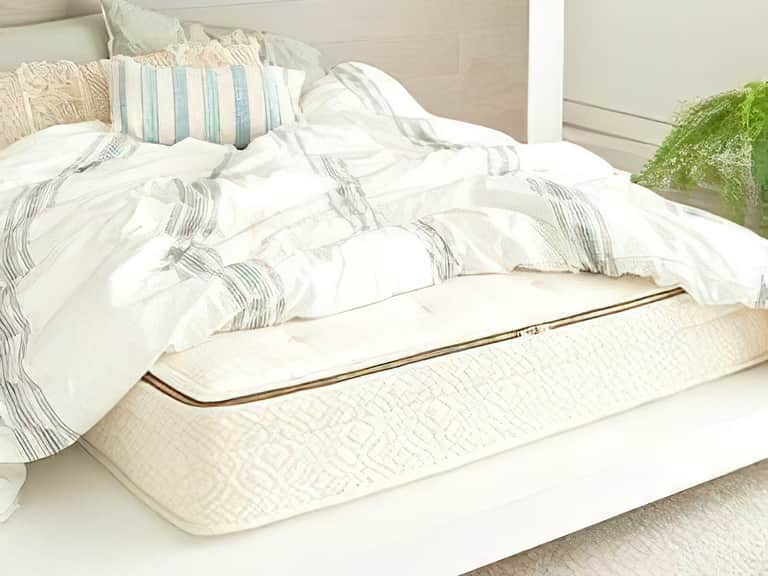
The word cover can describe several different things, and they do not all serve the same purpose. A mattress’s original outer casing is part of its construction. It may be sewn on or designed to unzip for specific care or adjustment. A separate protector, by contrast, is an added bedding layer intended to shield the surface. A mattress pad usually adds a little cushioning as well as some everyday protection.
Those distinctions matter with latex. Latex mattresses may be built from one or more foam layers, wrapped in fabric and, in some designs, natural fibers such as wool. An outer cover is not necessarily meant to be removed or washed at home. Removing it without checking the manufacturer’s instructions could affect the mattress or its warranty. When in doubt, treat the mattress casing as a fixed part of the bed and use a separate layer for routine protection.
A fitted protector generally has a thin profile and elastic sides or a skirt that holds it around the mattress. Some are designed to resist spills, while others focus on keeping dust, perspiration, and ordinary wear away from the mattress. A pad tends to have more loft or quilting, which can soften the sleep surface. A full encasement wraps around all sides and closes with a zipper; that format may be appropriate when complete enclosure is needed, but it can feel different from a simple fitted layer.
Before choosing, identify the job to be done. Is the main concern accidental spills? General cleanliness? A washable barrier between the sleeper and the bed? A small change in surface cushioning? The clearer the need, the easier it is to avoid buying a layer that solves a problem you do not have while introducing a new one.
Why materials influence the feel of a latex bed
Latex is known for an elastic, responsive feel. It compresses under weight and pushes back, offering a sensation that differs from the slower, more enveloping response associated with many memory foam surfaces. A protector does not change the material inside the mattress, but it can change how readily a sleeper feels that response.
Thin, flexible fabrics are more likely to preserve the close-to-the-mattress feel. Thicker quilting, lofty batting, or a firm waterproof layer may create a more noticeable boundary between the sleeper and the latex. That change is not automatically a drawback: some people prefer a little extra softness, and others need a stronger moisture barrier. The key is knowing that comfort is cumulative. A padded protector plus a thick fitted sheet can add more loft than either layer suggests on its own.
Common cover and protector materials include cotton, polyester, blends, and fabrics paired with a waterproof membrane. Cotton is familiar, washable, and available in different weaves and weights. A knit construction can stretch and follow the contours of a mattress, while a woven fabric may feel smoother or more structured. Polyester and blended fabrics may offer durability, stretch, or quick drying, depending on their construction. Fiber names alone do not determine how a cover will perform; thickness, weave, finishing, and the layers beneath the surface matter, too.
Natural-fiber labels also need careful interpretation. A material described as organic or natural does not by itself tell you whether a product is waterproof, how breathable it feels, or how it should be washed. Certifications can help explain the standards a product meets, but they are not a substitute for checking construction and care details. For a latex bed, focus on the actual combination of fabric, backing, and fit rather than assuming one fiber will be ideal for every sleeper.
Breathability is a whole-bed question
People often describe a protector as “breathable,” but the word can mean different things in product descriptions. In practical terms, it is useful to consider how the complete bedding setup handles heat and moisture. A fabric may feel light and airy on its own, yet a waterproof backing can change how the whole layer behaves. A dense quilted pad can also hold more warmth than a thin fitted protector.
Latex itself is only one part of the sleep climate. Sheets, blankets, room temperature, humidity, sleepwear, and individual sensitivity can all play a role in whether someone feels warm overnight. A new protector may help preserve a familiar surface, or it may noticeably alter that surface. If temperature comfort is a concern, consider the weight and construction of every layer, not just the fiber named on the label.
Waterproof protection involves a trade-off worth weighing. It can be useful in a household where spills, perspiration, or other moisture exposure are likely. But an added barrier may affect the feel of the mattress and the way the bedding manages warmth. Product descriptions such as “quiet,” “thin,” or “breathable” are clues, not guarantees that every sleeper will experience the layer the same way.
If you are unsure, start with the least bulky option that meets your protection needs. Give it a few nights of normal use, paying attention to temperature, crinkling, bunching, and whether the bed still feels responsive. If the surface feels too cushioned or warm, a thinner construction may be worth considering. If spill protection is essential, it may be reasonable to accept a more noticeable layer in exchange for the barrier you need.
Fitted protector or removable mattress cover?
A fitted protector is usually the more straightforward choice for routine use. It can be removed for laundering and put back on without dismantling the mattress. Its purpose is to act as an accessible layer between the mattress and the sheet. Depending on the design, it may protect the top surface only or cover the sides as well.
A zippered encasement surrounds the mattress more completely. That can be useful when full enclosure is specifically required, but it also means more fabric around the bed and a more involved process when the layer needs to be removed. Check whether the design is intended for your mattress type and whether its construction suits your preferences for surface feel and temperature. A protective feature should be considered alongside the everyday experience of sleeping on it.
The mattress’s original removable cover is a separate matter. Some beds have a cover designed to come off, while others specifically require it to stay in place. Look up the care instructions for the exact mattress before unzipping or laundering any original casing. Do not assume that “removable” means machine washable, or that a mattress cover can be replaced with a generic fitted protector. The original casing may be integral to how the mattress is assembled.
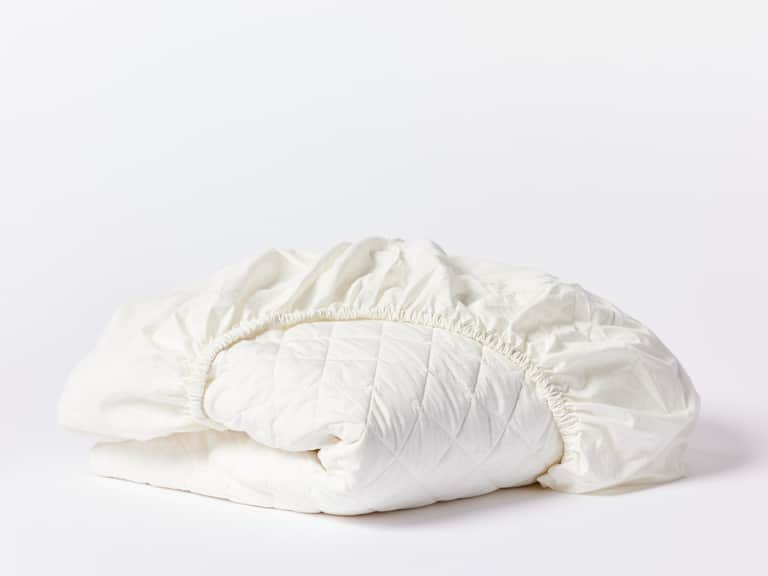
For anyone looking for a modestly cushioned cotton layer rather than a dedicated waterproof barrier, a 100% organic cotton mattress pad is one example of a fitted pad construction. It has quilted cotton, 15-inch deep pockets, and a full elastic underside. Because a pad adds a layer of cushioning, check that this is the kind of surface change you want before using it over latex. It should not be treated as equivalent to a waterproof protector unless its product specifications explicitly say so.
Fit is more than mattress size
A protector labeled “queen” still needs to match the mattress’s height and construction. Latex beds vary in thickness, and some have additional toppers or deep quilting. Measure the mattress as it is actually used, including any permanent topper that will remain underneath the protector. Compare that measurement with the product’s stated pocket depth or maximum mattress height.
Too little depth can make a fitted layer pull tight at the corners, lift during the night, or fail to stay anchored. Excess fabric can bunch or leave loose areas beneath the sheet. A secure fit helps keep the sleeping surface smooth, which is especially important when a sleeper is sensitive to wrinkles or unevenness. Elastic placement and skirt design can affect how well a protector stays put, so size and construction deserve equal attention.
- Measure the mattress: Check length, width, and height rather than relying only on a size label.
- Include the layers beneath: Account for any topper or pad that will remain on the mattress.
- Check pocket depth: Confirm that the protector’s stated range accommodates the full depth.
- Look at the attachment: Elastic all around, corner straps, and fitted skirts hold in different ways.
- Consider mattress movement: Adjustable bases and split mattresses may need a more flexible fit or separate pieces.
After fitting the layer, smooth it across the surface and check the corners before adding a sheet. If it slides, pulls, or forms ridges, revisit the dimensions and installation. A product that technically fits but constantly shifts is unlikely to feel like a good solution in everyday use.
Care instructions can shape the decision
A protector only offers practical value if it can be cared for in a way that suits the household. Read the label before purchase, especially if frequent laundering is important. Some layers are machine washable; others require more careful treatment. High heat, bleach, fabric softener, or an unsuitable wash cycle may damage fabrics or membranes. Follow the product’s instructions rather than applying a general rule to every material.
Allow for drying time, too. A waterproof layer or a dense pad may take longer to dry than a thin cotton cover. Keeping an additional fitted sheet or protector on hand can make laundry days easier, but multiple layers should not be stacked without considering how they affect feel and temperature. More protection is not always better if it makes the bed uncomfortable or interferes with the fit.
Spills should be handled promptly, but avoid pouring cleaning products directly onto a latex mattress unless the maker’s care guidance permits it. If moisture passes through a protector, follow the mattress manufacturer’s instructions for cleaning and drying. Keeping the bed’s surface dry and well ventilated is a sensible general measure; aggressive scrubbing or excess water can create a different problem.
A practical way to choose
Rather than comparing every feature at once, work through a short sequence. Start with the risk you want to manage. If routine dust and wear are the concern, a light, washable fitted protector may be enough. If liquids are a meaningful risk, look for a product whose waterproof function is clearly stated and consider how that construction may change the feel. If a touch of softness is the priority, a pad may be appropriate, with the understanding that it is not necessarily a spill barrier.
Next, decide how closely you want to preserve the latex surface. A thin, flexible layer is generally the more conservative starting point for someone who likes the mattress’s original feel. A quilted pad offers a more perceptible change. Neither option is universally right; comfort preferences and practical household needs differ.
Then review the details that are easy to overlook: the mattress depth, pocket measurements, whether the layer covers the sides, the stated care method, and any specific compatibility notes. Do not rely on a broad marketing term when a concrete measurement or care instruction is available. When the information is unclear, consult the manufacturer or retailer before using the product.
- Name the need. Decide whether you want everyday protection, spill resistance, added cushioning, or full enclosure.
- Choose a construction. Compare fitted protectors, pads, and encasements according to that need.
- Assess the material stack. Consider fabric, backing, quilting, sheets, and blankets together.
- Verify fit and care. Match pocket depth to the bed and make sure the washing instructions are manageable.
- Evaluate the result. After installation, notice whether the surface remains comfortable, smooth, and appropriately cool.
Common assumptions to reconsider
“Natural fabric always sleeps cooler.” Fiber content is only part of the picture. Fabric weight, weave, waterproof backing, quilted fill, and the rest of the bedding all contribute to how a layer feels overnight.
“A mattress pad protects against every spill.” Many pads add cushioning and absorb small amounts of moisture, but that does not make them waterproof. Check the construction and product description when liquid protection is important.
“A deeper pocket means a better fit.” The pocket must accommodate the mattress without excessive slack. The goal is a secure fit, not the greatest depth available.
“The mattress casing can be washed like bedding.” Care instructions vary. Some casings are not meant to be removed, and removable covers may have specific cleaning limitations. Check the mattress documentation first.
“More layers equal more protection.” Extra layers can bunch, hold warmth, or make the bed feel less responsive. Choose only the layers that serve a clear purpose.
The bottom line
Protecting a latex bed does not require a complicated setup. It requires a layer suited to the job, made in a construction you can live with, and sized for the mattress you actually own. Fabric and backing affect more than durability: they can change how the surface feels, how the bed handles moisture, and whether the sleep environment feels comfortable through the night.
For a close-to-the-mattress sensation, begin with a slim, flexible protector that fits securely. Choose a quilted pad when a little extra cushioning is welcome, and seek a clearly specified waterproof layer when spills are the main concern. In every case, check the mattress maker’s care guidance, measure the bed, and follow the cover’s laundering instructions.
The best latex bed cover is not necessarily the one with the longest feature list. It is the one that provides the protection you need, stays in place, and lets the mattress feel like the bed you chose.