The Latex Landscape: Natural, Synthetic, and Blended
Latex mattresses sit at an intriguing crossroads of comfort, science, and craft. They come in three broad families: natural latex, synthetic latex, and blends of the two. Each family offers distinct feel profiles, responsiveness, and environmental footprints. Natural latex is harvested from rubber trees and cured into solid or layered foams. It’s prized for its resilience and buoyant support, often delivering a springy feel with a natural, antimicrobial quality. Synthetic latex, often based on petrochemical polymers, can be tuned for a broader range of feels and typically comes with a lower price point. Blended latex sits in between, attempting to balance the positives of both.
When you’re evaluating a latex mattress, the “feel” is the primary signal. Do you want a quick, buoyant response that helps with movement ease, or do you prefer a slower, deeper contour that cradles the body? ILD (Indentation Load Deflection) ratings, a standard measure of firmness, help quantify these experiences. A higher ILD suggests a firmer feel; a lower ILD translates to softer, more yielding support. And density—often expressed in kilograms per cubic meter (kg/m³)—influences durability and comfort under load. Higher density latex tends to resist sagging and maintain support longer, a crucial factor for sleepers who spend many years in the same bed.
For Direction A, the Sleep Education & Sleep Science Center framework guides readers to weigh materials with a critical eye toward sleep science. Latex is not just a marketing label; it interacts with temperature, humidity, and pressure distribution. Natural latex often benefits breathability and moisture management, aiding temperature regulation. Synthetic options can enhance breathability as well, but the source material and cure process shape long-term performance. Blends can offer a compromise: a balanced feel with predictable performance across a range of sleepers.
Density, Layering, and the Anatomy of Comfort
Latex mattresses rarely rely on a single layer. A thoughtful build combines layers of latex with varying densities to tailor support for different body zones. A common approach is a taller comfort layer atop a firmer core. For back sleepers, a medium to medium-firm overall feel with balanced contouring supports spinal alignment while reducing pressure on the hips and shoulders. Side sleepers may benefit from a slightly plusher top layer to cushion prominent pressure points. Stomach sleepers often require a firmer overall feel to maintain spinal neutrality without excessive sinkage.
Another dimension is temperature regulation. Natural latex tends to be breathable thanks to interconnected cells and open pore structures. Some manufacturers infuse latex with cooling technologies or pair it with covers designed to wick moisture. The result is a mattress that remains comfortable across a wider range of room temperatures and sleeper metabolisms. When evaluating density and layering, consider your typical position, body weight, and whether you tend to sleep hot or cool.
Three Timelines: Voices That Shaped Sleep Thought
Across centuries, three distinct perspectives illuminate how we understand sleep comfort and mattress design. Each voice contributes a unique lens—scientific, artisanal, and consumer-friendly—that helps readers navigate latex with context and curiosity.
-
1) The Enlightened Skeptic (18th–19th century)
This era valued empirical observation and the beginning of clinical approaches to sleep. Thinkers in this period would have approached the science of supportive surfaces with a critical eye, asking who benefits from better sleep infrastructure and how such benefits could be measured. Their spirit informs today’s emphasis on evidence-based guidance: how latex performance aligns with sleep stages, body mechanics, and long-term health outcomes. -
2) The Artisan Innovator (Mid 20th century)
The mid-20th century brought a wave of manufacturing advances, synthetic materials, and the modern bed-in-a-box era. In this timeline, latex emerged as a serious alternative to traditional innerspring cores, with new production methods enabling consistent layering and durability. This voice champions craftsmanship, durability, and tactile feedback—the way a mattress responds to a sleeper’s weight and movement. It’s about the tactile relationship we have with our bed. -
3) The Consumer Advocate (21st century)
The current era blends science, transparency, and accessibility. Consumers want clear data on materials, certifications (such as GOTS or Oeko-Tex equivalents for textile layers), and independent testing. This voice prioritizes education: how to interpret ILD, how density predicts longevity, and how to align a latex choice with sleep quality goals rather than marketing promises.
Practical Guide: Choosing a Latex Mattress
To translate science into action, here is a concise, evidence-forward framework for selecting latex mattresses that suits different sleep profiles. Remember: every sleeper is unique, and a trial period can reveal comfort realities that specs cannot fully predict.
- Determine your position and pressure map. Side sleepers often benefit from a slightly plusher top layer to accommodate shoulders and hips. Back sleepers typically need a balance of contour and support to maintain spinal alignment. Stomach sleepers usually require a firmer overall feel to prevent the midsection from sagging into the mattress.
- Assess latex family and ILD ranges. Natural latex with mid-range ILD often yields a comfortable blend of contour and lift. Blends can offer stability with a touch more durability. Synthetic latex may provide a consistent feel at a lower cost, but verify certifications and source quality.
- Check density and durability signals. Higher density latex generally improves longevity and support, reducing sag over time. If you anticipate heavy use or long-term investment, choose denser latex for the comfort layer or layered configurations that distribute load effectively.
- Consider temperature management features. Look for breathable covers, ventilated latex layers, or integrated cooling technologies. Latex’s natural breathability is a plus, but confirm that the overall design prioritizes airflow across the sleep surface.
- Certification and health considerations. Seek out latex products that carry eco-certifications and non-toxic claims. Certifications help ensure the absence of harmful fire retardants or chemical additives, aiding a healthier sleep surface for you and your family.
A Case Study: The Savvy Rest Wool Mattress Pad in Context
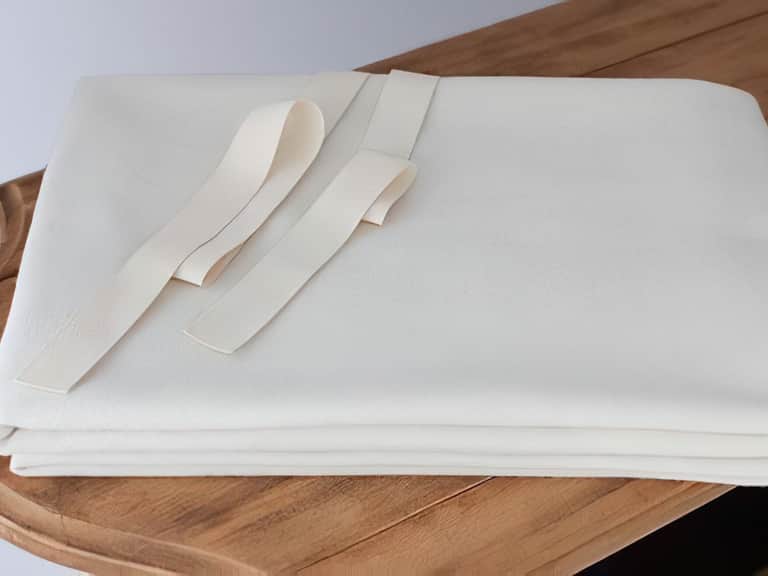
As part of a broader sleep-support ecosystem, accessories like the Savvy Rest Wool Mattress Pad exemplify how a layered sleep system can extend comfort and maintain healthful microclimate. While not a latex core itself, a wool mattress pad contributes to temperature neutrality, humidity regulation, and dust-mite resistance—a practical complement to latex-based mattresses. The wool’s natural properties align with the direction of Sleep Education & Sleep Science Center: prioritize evidence-informed, materials-conscious choices that support durable, healthy sleep environments.
Product spotlight: Savvy Rest Wool Mattress Pad (priced at 259.00). This pad is described as densely woven, moisture-resistant, and adaptable to mattress depth up to 14 inches. It’s made in the USA and features organic cotton corner ties to ensure a snug fit. While wool adds a climate-regulating layer, the core latex experience—whether natural or blended—benefits from such an accessory that complements breathability and comfort. For readers exploring latex mattresses, the pad demonstrates how layering and materials interact to shape overall sleep texture and temperature control.
In editorial practice, we emphasize transparent, non-promotional guidance. Accessories like this pad illustrate how sleep ecosystems function: a mattress, a cover, a pad, and the sleeping body all contribute to the final experience. The takeaway is not product worship but a holistic approach to sleep health that respects science, craftsmanship, and consumer needs.
Three Timelines Revisited: Interpreting latex through Time
To weave the three voices into practical wisdom, consider how the Enlightened Skeptic, Artisan Innovator, and Consumer Advocate inform today’s latex choices:
- From the Enlightened Skeptic: demand transparent data, robust testing, and evidence-of-benefit rather than marketing promises. Look for independent lab results and clear explanations of how latex interacts with sleep stages.
- From the Artisan Innovator: value the craft of layering and the tactile feedback of the material. Assess how the build supports a dynamic range of body weights and sleeping styles, not just a single idealized feel.
- From the Consumer Advocate: prioritize health-conscious materials, certifications, long-term durability, and cost-per-longevity. A mattress is a long-term investment in health; better to buy once with confidence than repeatedly replace.
Conclusion: Latex as a Living Interface Between Science and Sleep
Latex mattresses represent a convergence of science, craft, and everyday sleep life. The right choice harmonizes your posture, temperature, and nightly rhythm with a surface that responds to your body while maintaining its shape and integrity over years. A thoughtful approach centers on evidence, transparent specification, and a willingness to test. By embracing the three voices—skeptic, artisan, and advocate—you can navigate the latex landscape with confidence, building a sleep environment that supports not just rest, but renewal.